Purchasing Guide

Supply Chain Transparency
Clear product specifications, complete documentation, and traceable logistics information are essential for reliable chemical procurement. Greater transparency helps buyers reduce communication errors, control delivery risks, and improve supply chain efficiency.
Key Information for Chemical Inquiries
A complete inquiry should include the product name, CAS number, required specifications, quantity, packaging, destination, and expected delivery time. Detailed information enables suppliers to confirm product availability and provide a more accurate quotation.

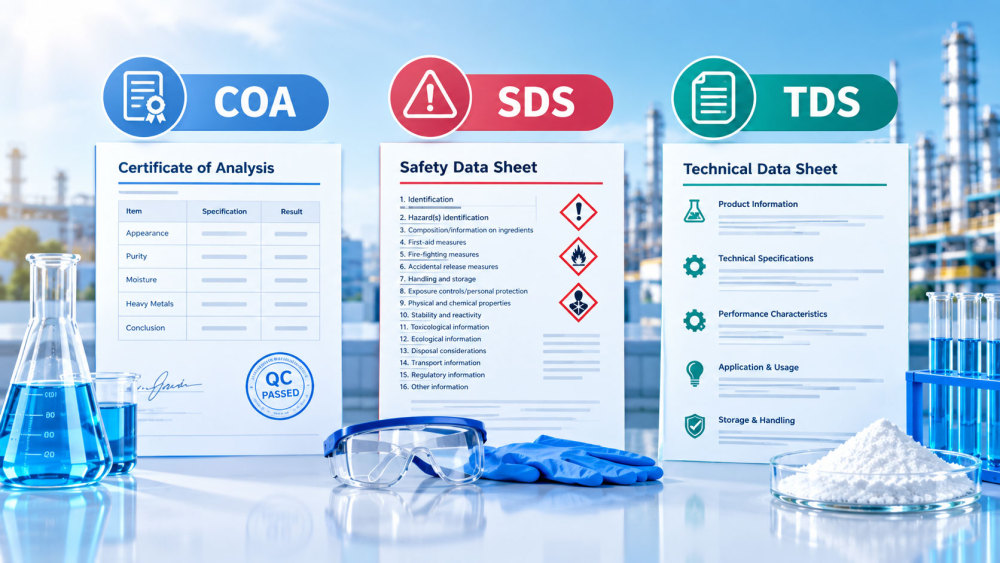
Understanding COA, SDS and TDS
COA is mainly used to verify the quality of a specific product batch, while SDS provides important safety, handling, storage, and transportation information. TDS focuses on technical properties, typical parameters, and application guidance for product selection.
International Shipping Requirements
Before shipment, buyers and suppliers should confirm the product classification, packaging requirements, shipping method, destination restrictions, and necessary export documents. Early coordination helps prevent delays caused by transportation or customs issues.


Evaluating Sample Test Results
Sample testing allows buyers to evaluate product quality, compatibility, and performance in their own formulas or production processes. After testing, both parties should reconfirm the specifications, packaging, quality standards, and documentation required for bulk orders.
Balancing Price, Quality and Delivery
The lowest product price does not always represent the lowest overall procurement cost. Buyers should also consider transportation, packaging, inspection, payment terms, delivery reliability, product consistency, and potential production risks.


The Importance of Export Packaging
Suitable packaging helps protect chemical products from moisture, leakage, contamination, breakage, and quality changes during handling and long-distance transportation. Packaging should be selected according to the product properties, shipping method, storage environment, and customer requirements.
Multi-Supplier Procurement Strategy
Using multiple qualified suppliers can provide alternative supply channels and reduce the impact of production or logistics disruptions. However, key materials require careful testing, supplier evaluation, document review, and production validation before switching sources.


Impact of Exchange Rates and Freight Costs
Exchange rates, ocean freight, fuel surcharges, port fees, container availability, and shipping routes can all affect the final import cost of chemical products. Buyers should compare quotations under the same trade terms and confirm the quotation validity period before placing an order.
Building a Digital Procurement System
Digital procurement can begin with standardized product names, CAS numbers, specifications, supplier records, certificates, and batch information. Well-organized data helps companies compare quotations, track document versions, manage quality records, and improve cooperation between purchasing, quality, warehouse, and production teams.

Send Us Your Inquiry Today

Kaiweiao Chemical is a professional chemical product supplier with ample stock of all chemical categories and excellent quality, welcome your purchase inquiry.